Filmed during a visit to Jerome Hill in Provence, Jonas Mekas sets his Bolex to capture a single day overlooking the port of Cassis. Shot frame by frame from morning to sunset, the film distills shifting light and color into a quiet meditation on time, place, and perception.
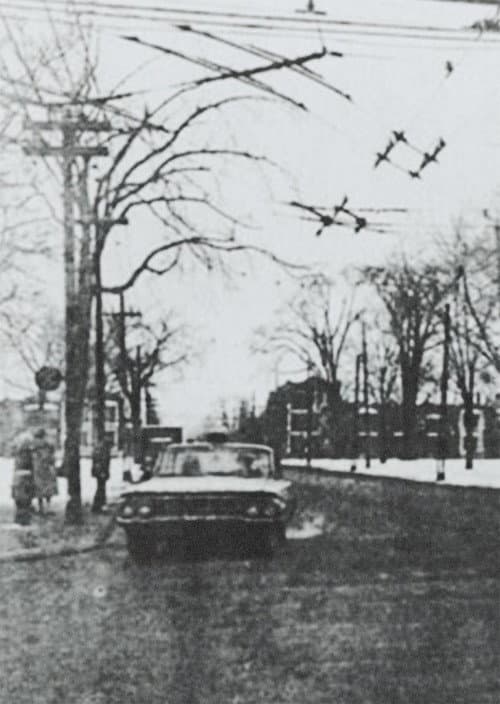
A silent succession of black-and-white photographs of the city of Montreal.
Explore NowThis programme tells the story behind the conception, recording and release of this groundbreaking album. By use of interviews, musical demonstration, performance, archive footage and returning to the multi tracks with Ahmet Zappa and Joe Travers we discover how Frank Zappa and The Mothers of Invention created the album with the help of legendary African- American producer Tom Wilson.
Explore NowThe Colegio de Arquitectos de Catalunya commissioned Pere Portabella to make this film for the Joan Miró retrospective exhibit in 1969. There were heated discussions on whether it would be prudent to screen the film during the exhibit. Portabella took the following stance: "either both films are screened or they don't screen any" and, finally, both Miro l'Altre and Aidez l'Espagne were shown. The film was made by combining newsreels and film material from the Spanish Civil War with prints by Miró from the series "Barcelona" (1939-1944). The film ends with the painter's "pochoir" known as Aidez l'Espagne.
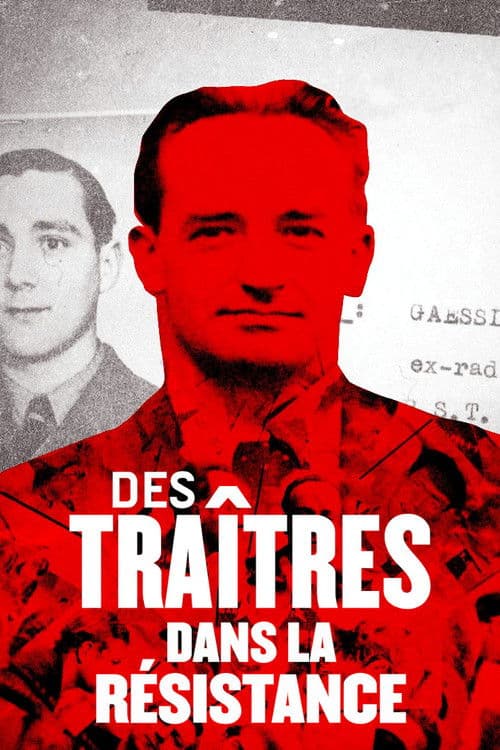
Explore NowIn May 1943, Ernst Kaltenbrunner, the new head of the Reich Central Security Office, gave Hitler a report describing in detail the organization of the French Resistance. Indeed, during the Second World War, most of the Resistance networks had been infiltrated by traitors, the "V Man" (trusted men) in the service of the occupier. The Germans had established treason as a system and recruiting Frenchmen ready to inform on them was one of their priorities. It was these Frenchmen, whose number is estimated at between 20,000 and 30,000, who dealt terrible blows to the Resistance.
Explore NowThis documentary follows the French soccer team on their way to victory in the 1998 World Cup in France. Stéphane Meunier spent the whole time filming the players, the coach and some other important characters of this victory, giving us a very intimate and nice view of them, as if we were with them.
Explore NowAnimal Charm makes videos from other people's videos. By compositing TV and reducing it to a kind of tic-ridden babble, they force television to not make sense. While this disruption is playful, it also reveals an overall 'essence' of mass culture that would not be apprehended otherwise. Videos such as Stuffing, Ashley, and Lightfoot Fever upset the hypnotic spectacle of TV viewing, revealing how advertising creates anxiety, how culture constructs "nature" and how conventional morality is dictated through seemingly neutral images. By forcing television to convulse like a raving lunatic, we might finally hear what it is actually saying.
Explore NowThe creative processes of avant-garde composer Philip Glass and progressive director/designer Robert Wilson are examined in this film. It documents their collaboration on this tradition breaking opera.
Explore NowWhile Trevor and Sam are smoking pot, Trevor’s mom comes home. When she finds out, Trevor reveals his father’s adulterous ways and destroys his family.
Explore NowSylvia Kristel – Paris is a portrait of Sylvia Kristel , best known for her role in the 1970’s erotic cult classic Emmanuelle, as well as a film about the impossibility of memory in relation to biography. Between November 2000 and June 2002 Manon de Boer recorded the stories and memories of Kristel. At each recording session she asked her to speak about a city where Kristel has lived: Paris, Los Angeles, Brussels or Amsterdam; over the two years she spoke on several occasions about the same city. At first glance the collection of stories appears to make up a sort of biography, but over time it shows the impossibility of biography: the impossibility of ‘plotting’ somebody’s life as a coherent narrative.
Explore NowA documentary film depicting five intimate portraits of migrants who fled their country of origin to seek refuge in France and find a space of freedom where they can fully experience their sexuality and their sexual identity: Giovanna, woman transgender of Colombian origin, Roman, Russian transgender man, Cate, Ugandan lesbian mother, Yi Chen, young Chinese gay man…
Explore NowIn barely a century, French peasants have seen their world profoundly turned upside down. While they once made up the vast majority of the country, today they are only a tiny minority and are faced with an immense challenge: to continue to feed France. From the figure of the simple tenant farmer described by Emile Guillaumin at the beginning of the 20th century to the heavy toll paid by peasants during the Great War, from the beginnings of mechanization in the inter-war period to the ambivalent figure of the peasant under the Occupation, From the unbridled race to industrialization in post-war France to the realization that it is now necessary to rethink the agricultural model and invent the agriculture of tomorrow, the film looks back at the long march of French peasants.
Explore Now