The intention of the film is to give an impression of what small exotic Denmark looks like, what the strange Danes look like and how they are. Nearly 100 Danes are presented in the film, amongst them a racing cyclist, a Minister of Finance, a popular actor and 13 unmarried women from a provincial town. "There is too much fogginess and rain and melancholy in most of the pictures of Denmark," says Jørgen Leth. "But not in my film. I would like to show you some authentic, clear and beautiful pictures from this strange country."
Too high, misused, unfair... a large part of the French and Europeans criticize taxes. From tax-rascal to tax revolt, the movement of yellow vests in France has returned to the center of attention the question of consent to tax. How to explain a different resistance to taxes from one country to another without tax pressure being an explanation? Is there a "good" tax? Jean Quatremer takes us on a journey to the tax center across Europe, to meet those who pay it, those who decide it, those who study it... or those who allow to avoid it.
Explore NowThree Danish entrepreneurs embark on making cherry wine on the island of Lolland.
Explore NowTommy Seebach Mortensen; or just Tommy Seebach to the whole nation; were born in Copenhagen in 1949 and passed away far too early in 2003. "Tommy" received four stars out of six by Politiken,[6] Berlingske Tidende[7] and Ekstra Bladet;[8] B.T. awarded it six stars out of six.[9] Dagbladet Information described it as "... a story of an artist who became a victim of the musical genre which he himself had helped innovate, and who, instead of gaining the broad recognition he had longed for his entire life, ended up with a status somewhere in between national heritage and kitsch clown..."[10] Politiken called the film "worthy, worth seeing and moving", Ekstra Bladet "a moving portrait of a man caught between the music, his family and the bottle".
Explore NowImpassivity and silence are Mads Mikkelsen's trademarks, and roles without reply his specialty. His sculptural allure is such that his mere presence takes on a dramatic dimension. For him, everything starts with the body. It's his main working tool, which he shapes and engages for each film. For the majority of world audiences, the Danish actor remains associated with his "villain" characters in Hollywood blockbusters - Casino Royale, Doctor Strange, Hannibal, Fantastic Beasts... Yet he finds with uncommon ease a balance between major American film franchises and more modest, confidential independent films. If the actor manages to move from one universe to another without being stereotyped, it's because he has a very physical - thanks to his former career as a gymnast - and pragmatic approach to his art.
Explore NowStarting as a documentary on the sexually liberated culture of late-Sixties Denmark, Sexual Freedom in Denmark winds up incorporating major elements of the marriage manual form and even manages to squeeze in a montage of beaver loops and erotic art. All narrated with earnest pronouncements concerning the social and psychological benefits of sexual liberation, the movie, is a kind of mondo film dotted with occasional glimpses of actual sex.
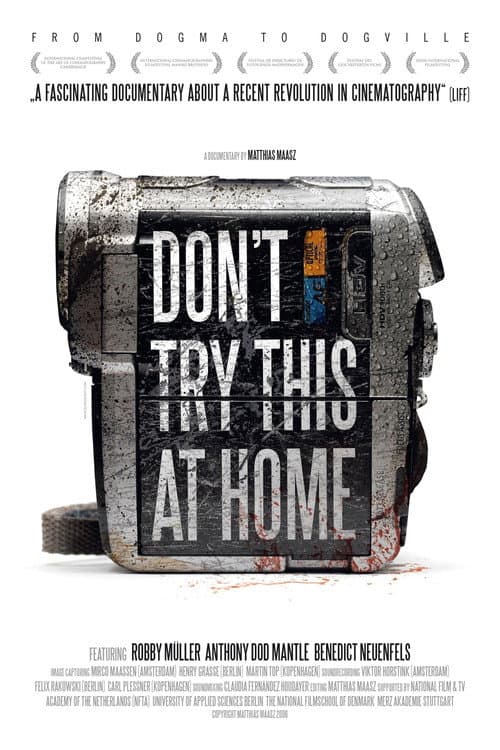
Explore NowA documentary with the three cinematographers known for breaking away cinema away from celluloid with the introduction of digital video.
Explore NowDanish soldiers are sent to Afghanistan in 2009 for 6 months, to help stabilize the country against the Taliban. They're stationed on Armadillo military base in Helman province. Unlike other war movies, this is the real deal – no actors.
Explore NowDocumentary about the construction of Thy Lejren in 1970 - an alternative summer camp. Features concerts by bands such as Gasolin' and Gnags.
Explore NowDramatization of the time around the first Danish Social Democrats and the Battle of Fælleden. A social blockbuster produced for AOF.
Explore NowThis travelogue begins with the vast agricultural wealth of the country, whose farmers can produce four times the amount required to feed the country's population. As such, the export of these agricultural products is a vital part of the country's economy. This agricultural tradition extends to its food consumption, as Denmark's vast array of open faced sandwiches is world renowned. It also extends to flower production and the Dane's love of flowers, which are sold in public markets. Denmark has a strong social support system, as witnessed by the free and mandatory public schooling, free medical services for expectant mothers and children, the provision of cooperative housing and housing for seniors, and the provision of old age pensions without premiums.
Explore Now