The drastic economic development in South Korea once surprised the rest of the world. However, behind of it was an oppression the marginalized female laborers had to endure. The film invites us to the lives of the working class women engaged in the textile industry of the 1960s, all the way through the stories of flight attendants, cashiers, and non-regular workers of today. As we encounter the vista of female factory workers in Cambodia that poignantly resembles the labor history of Korea, the form of labor changes its appearance but the essence of the bread-and-butter question remains still.
Stories of three women who have been living in Itaewon, Seoul, Korea since the era that the town was run by U.S dollars of the U.S. Army.
Explore NowWorking men and women leave through the main gate of the Lumière factory in Lyon, France. Filmed on 22 March 1895, it is often referred to as the first real motion picture ever made, although Louis Le Prince's 1888 Roundhay Garden Scene pre-dated it by seven years. Three separate versions of this film exist, which differ from one another in numerous ways. The first version features a carriage drawn by one horse, while in the second version the carriage is drawn by two horses, and there is no carriage at all in the third version. The clothing style is also different between the three versions, demonstrating the different seasons in which each was filmed. This film was made in the 35 mm format with an aspect ratio of 1.33:1, and at a speed of 16 frames per second. At that rate, the 17 meters of film length provided a duration of 46 seconds, holding a total of 800 frames.
Explore NowAccording to the information written in the credit roll of "Seoul 7000," the film was filmed in Seoul in November 1976 with an 'Elmo 108' 8mm camera using Kodachrome 40 film. It was also stated that "it was filmed frame by frame, and the shooting speed was adjusted differently for each shot," and "the number 7000 in the title of this film represents the total number of frames in all parts except for the title."
Explore NowJourney with the musicians of the Berlin Philharmonic and their conductor Sir Simon Rattle on a breakneck concert tour of six metropolises across Asia: Beijing, Seoul, Shanghai, Hong Kong, Taipei and Tokyo. Their artistic triumph onstage belies a dynamic and dramatic life backstage. The orchestra is a closed society that observes its own laws and traditions, and in the words of one of its musicians is, “an island, a democratic microcosm – almost without precedent in the music world - whose social structure and cohesion is not only founded on a common love for music but also informed by competition, compulsion and the pressure to perform to a high pitch of excellence... .” Never before has the Berlin Philharmonic allowed such intimate and exclusive access into its private world.
Explore NowFilmed in the Inner Mongolian portion of the Gobi Desert, this film follows a group of oil field workers as they go about their daily routine.
Explore NowA documentary that invites the viewer to immerse themselves in a intimate and thoughtful walk through Poblenou Cemetery in Barcelona, better know as "El Santet", to see what is happening at its surrounding areas and, especially, inside: work, buildings, people watching over those who are no longer here, cemetery workers... A trip through a space that is closer than we think.
Explore NowThe Seongdong area of Seoul has been home to many small and medium-sized manufacturers. The once iconic red brick factories have given way to redevelopment, making way for galleries, cafes, and upscale restaurants. As a result, Seongdong has seen the largest increase in land rental prices in South Korea. Regrettably, this transformation also reveals a harrowing story: for the past five decades, hundreds of shoemakers have worked tirelessly for up to 18 hours a day, making shoes for wages below the minimum standard. Each day, these workers leave their homes for work, not knowing if it will mark their final day in this relentless cycle.
Explore NowOver 98 days from August 20th to November 25th 2013, 2821 people from around the world sent 11,852 video featuring many different faces of Seoul. 154 were selected, edited, and made into a movie.
Explore NowIn suburban Buenos Aires, thirty unemployed ceramics workers walk into their idle factory, roll out sleeping mats and refuse to leave. All they want is to re-start the silent machines. But this simple act - the take - has the power to turn the globalization debate on its head. Armed only with slingshots and an abiding faith in shop-floor democracy, the workers face off against the bosses, bankers and a whole system that sees their beloved factories as nothing more than scrap metal for sale.
Explore NowNot everyone sleeps at night in Zagreb. An exploration of various night-time jobs.
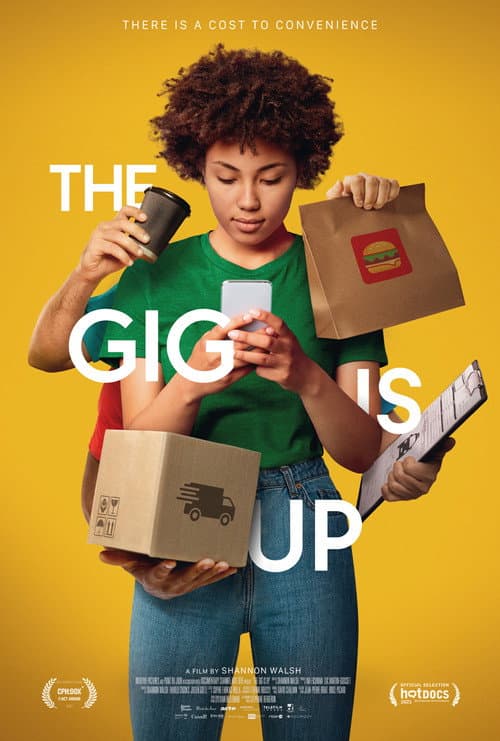
Explore NowA very human tech doc, uncovers the real costs of the platform economy through the lives of workers from around the world for companies including Uber, Amazon and Deliveroo. From delivering food and driving ride shares to tagging images for AI, millions of people around the world are finding work task by task online. The gig economy is worth over 5 trillion USD globally, and growing. And yet the stories of the workers behind this tech revolution have gone largely neglected. Who are the people in this shadow workforce? It brings their stories into the light. Lured by the promise of flexible work hours, independence, and control over time and money, workers from around the world have found a very different reality. Work conditions are often dangerous, pay often changes without notice, and workers can effectively be fired through deactivation or a bad rating. Through an engaging global cast of characters, it reveals how the magic of technology we are being sold might not be magic at all.
Explore Now