The life and times of an American invention??
Equal parts punk and psychedelia, the Flaming Lips emerged from Oklahoma City as one of the most bracing bands of the late 1980s. The Fearless Freaks documents their rise from Butthole Surfers-imitating noisemakers to grand poobahs of orchestral pop masterpieces. Filmmaker Bradley Beesely had the good fortune of living in the same neighborhood as lead Lip Wayne Coyne, who quickly enlisted his buddy to document his band's many concerts and assorted exploits. The early footage is a riot, with tragic hair styles on proud display as the boys attempt to cover up their lack of natural talent with sheer volume. During one show, they even have a friend bring a motorcycle on stage, which is then miked for sound and revved throughout the performance, clearing the club with toxic levels of carbon monoxide. Great punk rock stuff. Interspersed among the live bits are interviews with the band's family and friends, revealing the often tragic circumstances of their childhoods and early career.
Whether famous or anonymous, stars or prisoners, models or sex workers, women have always been at the center of Bettina Rheims' photographic work since her debut in 1978. Both subversive and glamorous, trashy and sophisticated, her photographs mark and bear witness to the upheavals of the era, which this leading photographer both anticipated and accompanied.
Explore Now"Dope, Hookers and Pavement" is a lively and unfiltered account of the early days of the Detroit hardcore punk scene, circa 1981-82, in the notorious Cass Corridor, arguably one of the worst neighbourhoods in the city at the time. Featuring over 70 in-depth interviews — including John Brannon (Negative Approach), Tesco Vee (Meatmen, Touch and Go), Ian MacKaye (Minor Threat, Dischord Records), pro skater Bill Danforth, scene kids, and members of the Necros, The Fix, Violent Apathy and Bored Youth — and never-before-seen Super8 footage of the Freezer, "Dope, Hookers and Pavement" is both hilarious and reflective, and an overdue record of a nearly invisible but magic little moment in the long history of Detroit rock'n'roll.
Explore NowThe Bellas are back, and they are better than ever. After being humiliated in front of none other than the President of the United States of America, the Bellas are taken out of the Aca-Circuit. In order to clear their name, and regain their status, the Bellas take on a seemingly impossible task: winning an international competition no American team has ever won. In order to accomplish this monumental task, they need to strengthen the bonds of friendship and sisterhood and blow away the competition with their amazing aca-magic! With all new friends and old rivals tagging along for the trip, the Bellas can hopefully accomplish their dreams.
Explore NowIn the effervescent Spain of the 80s, Xavi Font, an artistic misfit, together with his friend Lurdes Iribar and her lover Manolo Arjona, founds Locomía. Although he achieves success, he also experiences the dark reality of the industry at the hands of powerful producer José Luís Gil.
Explore NowVienna, 1826. The penniless composer Franz Schubert lives with friends in the house of court glazier Tschöll and his wife. Because of their three beautiful daughters, Hederl, Haiderl, and Hannerl, the property is called the "Three Girls' House." Hederl and Haiderl celebrate a double wedding with the gentlemen, master saddler Bruneder and postmaster Binder. Due to an intrigue by soprano Lucia Grisi, Hannerl, with whom Schubert is in love but dares not reveal herself, turns away from him and marries singer Franz von Schober. Schubert is left with nothing but music.
Explore NowRocky IV is dually symbolic - it embodies both the victory of the American boxer over the Soviet one and the victory of neo-liberalism over a dwindling socialism. Today, Rocky is held up as a model by some and is a subject of derision for others. An emblem of the 1980s, its culture and its heroes, the film will be the subject of an entertaining analysis of popular culture.
Explore NowWorking men and women leave through the main gate of the Lumière factory in Lyon, France. Filmed on 22 March 1895, it is often referred to as the first real motion picture ever made, although Louis Le Prince's 1888 Roundhay Garden Scene pre-dated it by seven years. Three separate versions of this film exist, which differ from one another in numerous ways. The first version features a carriage drawn by one horse, while in the second version the carriage is drawn by two horses, and there is no carriage at all in the third version. The clothing style is also different between the three versions, demonstrating the different seasons in which each was filmed. This film was made in the 35 mm format with an aspect ratio of 1.33:1, and at a speed of 16 frames per second. At that rate, the 17 meters of film length provided a duration of 46 seconds, holding a total of 800 frames.
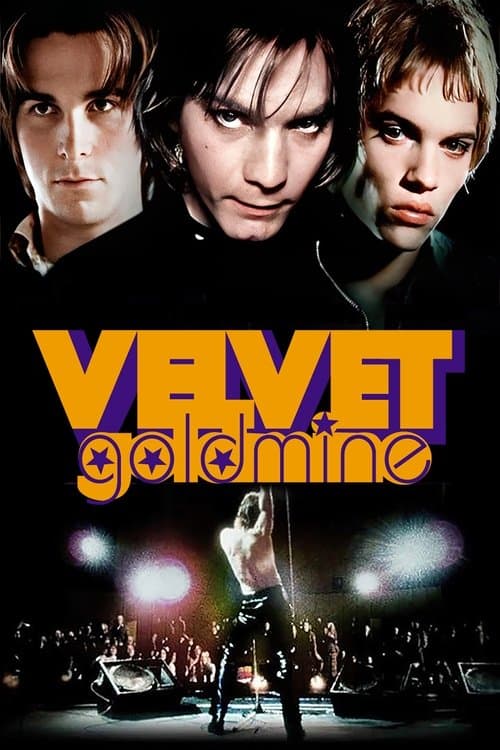
Explore NowAlmost a decade since larger-than-life glam-rock enigma Brian Slade disappeared from public eye, an investigative journalist is on assignment to uncover the truth behind his former idol.
Explore NowHenry Rollins narrates Lilly Scourtis Ayers' no-holds-barred profile of volatile Bay Area punk legend Marian Anderson, whose hypnotic beauty, devil-may-care rebellion and shocking sexual exploits onstage launched her to infamy before tragically dying of a heroin overdose at the tender age of 33.
Explore NowA documentary on the revolutionary life and career of director Juan Antonio Bardem, including interviews with many of his colleagues, including Luis Garcia Berlanga.
Explore NowLifting the lid on one of the most iconic singers, songwriters and performers of all time with a look at the most powerful moments that molded Elton John's career and identity. Highlighting each moment are Elton's own words from his writings and interviews as he reflects on each major milestone that altered the trajectory of his life.
Explore Now