Black Cinema Trailers 1946-76
Co-curated by Jenni Olson and the late Black gay activist Karl Knapper, this entertaining showcase of vintage movie trailers traces the evolution of African American cinema through its most crucial period, 1952-1976. Filled with insights on race and social dynamics, this fascinating compendium of coming attractions explores an extensive range of stylistic approaches—Blaxploitation, Comedy, Music Bio, Plantation Drama and more—offering an outrageous joyride through motion picture history. Beyond mere camp, these marvelously condensed gems crystallize a range of African American identities and personalities, tracking the meteoric careers of Sidney Poitier, James Earl Jones, Billy Dee Williams, Richard Pryor, Pam Grier and others through their bold performances in movies both hugely popular and practically forgotten. Afro Promo provides a compact glimpse at the representation of African Americans through twenty-five dynamic years of American cinema history.
Working men and women leave through the main gate of the Lumière factory in Lyon, France. Filmed on 22 March 1895, it is often referred to as the first real motion picture ever made, although Louis Le Prince's 1888 Roundhay Garden Scene pre-dated it by seven years. Three separate versions of this film exist, which differ from one another in numerous ways. The first version features a carriage drawn by one horse, while in the second version the carriage is drawn by two horses, and there is no carriage at all in the third version. The clothing style is also different between the three versions, demonstrating the different seasons in which each was filmed. This film was made in the 35 mm format with an aspect ratio of 1.33:1, and at a speed of 16 frames per second. At that rate, the 17 meters of film length provided a duration of 46 seconds, holding a total of 800 frames.
Explore NowIn "Gone with the Wind" she was an unforgettable Scarlett O'Hara. Beauty, two-time Oscar winner, celebrated Hollywood star and great Shakespearean interpreter - Vivien Leigh was all that. Behind the celebrity, however, was a fragile person. Her bipolar disorder clouded her success and her private happiness.
Explore NowA documentary on the revolutionary life and career of director Juan Antonio Bardem, including interviews with many of his colleagues, including Luis Garcia Berlanga.
Explore NowWhen Francois Truffaut approached Alfred Hitchcock in 1962 with the idea of having a long conversation with him about his work and publishing this in book form, he didn't imagine that more than four years would pass before Le Cinéma selon Hitchcock finally appeared in 1966. Not only in France but all over the world, Truffaut's Hitchcock interview developed over the years into a standard bible of film literature. In 1983, three years after Hitchcock's death, Truffaut decided to expand his by now legendary book to include a concluding chapter and have it published as the "Edition définitive". This film describes the genesis of the "Hitchbook" and throws light on the strange friendship between two completely different men. The centrepieces are the extracts from the original sound recordings of the interview with the voices of Alfred Hitchcock, Francois Truffaut, and Helen Scott – recordings which have never been heard in public before.
Explore NowA tribute to the late, great French director Francois Truffaut, this documentary was undoubtedly named after his last movie, Vivement Dimanche!, released in 1983. Included in this overview of Truffaut's contribution to filmmaking are clips from 14 of his movies arranged according to the themes he favored. These include childhood, literature, the cinema itself, romance, marriage, and death.
Explore NowThe question of "who hunts virgins" and more will be stripped down and explored in the sexiest trailers hosted by Playboy's Nikki Leigh.
Explore NowIn a rare interview, Katharine Hepburn shares her memories and memorabilia.
Explore NowThis documentary is featured on the two-disc Chaplin Collection DVD for "The Kid" (1921), released in 2004.
Explore NowFour lives that could not be more different and a single passion that unites them: the unconditional love for their cinemas, somewhere at the end of the world. Comrades in Dreams brings together six cinema makers from North Korea, America, India and Africa and follows their efforts to make their audiences dream every night.
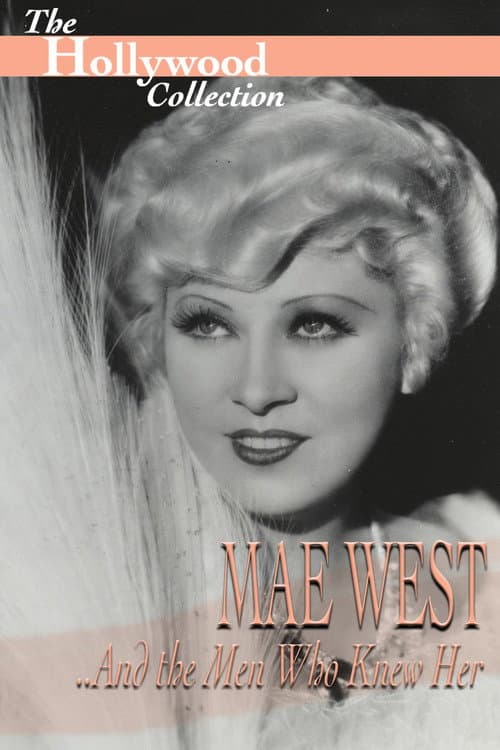
Explore NowAs the first "blonde bombshell," Mae West reigned supreme and changed the nation's view of women, sex and race — on stage, in films, on radio and television.
Explore NowKnown for his personification of the Western Hero, it was Montana-born Gary Cooper's horse-riding skills that first brought him bit parts in movies. And he never lost his love of the great American outdoors. Though he rarely played a villain and was an adept comedian, Cooper is best remembered for his strong, silent heroes. With his lanky country boy looks and shy hesitancy he created a unique screen presence, though his real life was one of sophisticated elegance.
Explore NowHe went from street-wise tough to art-collector liberal-activist, from circus-acrobat hunk to Academy Award winner. Burton Stephen Lancaster — later Burt Lancaster — was one of five children of a New York City postal worker. By eighteen, Burt was 6'2" and blessed with the athletic physique and dynamic good looks that helped make him famous. A stint in the Army introduced Burt to acting and led him to Hollywood where his first release, "The Killers" (1946), propelled him to stardom at age 32. He took control of his own career and seldom faltered.
Explore Now