Archeologists discover a pit filled with terracotta warriors buried to protect the grave of the First Emperor of China.
The Chinese philosophy of the Five Elements postulates that everything in our universe is based on wood, fire, earth, metal, and water. While traveling through China’s stunning landscapes and witnessing the seasons, this documentary seeks not only the roots of this ancient theory but also the continuing impacts on modern China.
Explore NowThis historical drama tells the story of Qin Shihuang, who unified China's vast territory and declared himself emperor in 221 B.C. During his reign, he introduced sweeping reforms, built a vast network of roads and connected the Great Wall of China. From the grandiose inner sanctum of Emperor Qin's royal palace, to fierce battles with feudal kings, this film re-creates the glory and the terror of the Qin Dynasty, including footage of Qin's life-sized terra cotta army, constructed 2,200 years ago for his tomb.
Explore NowEqual parts documentary, essay, and narrative,"Captain Elliot's Circle" is mostly a poetic interaction with an obscure corner of Chinese and British history. Constructed using primary source documents about the taking of Zhoushan, Britain's first choice for a seaport, in the late 1830s,this movie uses Captain Charles Elliot's reluctance to brutalize the Chinese to reflect on the cyclical nature of history and the power structures that move it. The long takes used throughout function to illustrate the dramatically different ways in which people who lived in the mid-19th century perceived time. Additionally, it represents the psychological effect of living on an island regardless of what era you were born in.The last third of the movie focuses on a young woman whose strange day job has taken her far away from the island of Zhoushan generations after Captain Charles Elliot was last there. "Captain Elliot's Circle" was shot on location in Zhoushan and Hangzhou.
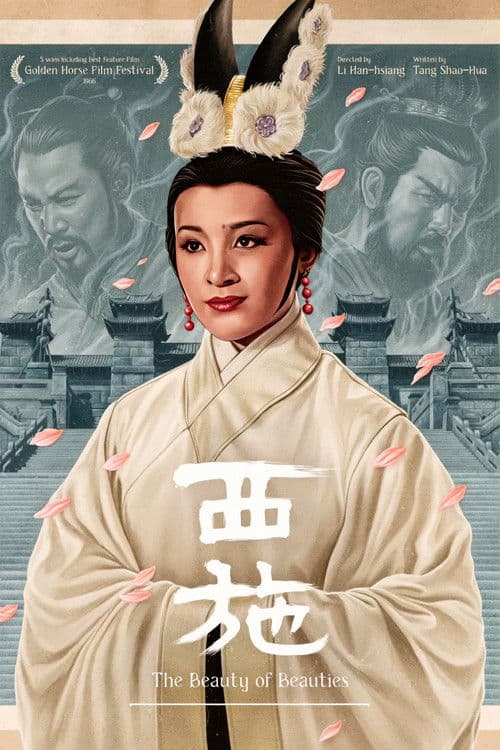
Explore NowHsi Shih: The Beauty of Beauties was one of the most ambitious films made in the Taiwan film industry in the 1960s. After leaving The Shaw Brothers studio in Hong Kong and moving to Taiwan, filmmaker Li Han-hsiang mounted this historical epic. Told through the story of Xishi (Hsi Shih), one of the 'Four Great Beauties' of Chinese history, the film portrays the war between two Chinese Kingdoms during the Warring States Period (475-221 B.C). After the kingdom of Yue is defeated by the kingdom of Wu, King Goujian of Yue takes pains to prepare for his revenge and rebuild his country. Knowing that King Fucha of Wu is lewd and lustful, he offers Xisi to the court of Wu to serve as Fucha’s concubine, with Fucha unaware that she is also a spy. She uses her charm to draw Fucha away from his office and governance, while King Goujian rallies his forces together to attempt to reclaim his lands.
Explore NowThe methods used by Danish archaeologists to study the Stone Age are illustrated.
Explore NowChaco Canyon, located in northwest New Mexico, is perhaps the only site in the world constructed in an elaborate pattern that mirrors the yearly cycle of the sun and the 19-year cycle of the moon. How did an ancient civilization, with no known written language, arrange its buildings into a virtual celestial calendar, spanning an area roughly the size of Ireland?
Explore NowMarshal Zhang Xueliang, Commander of the North Eastern Army, grows progressively disillusioned by Kuomintang leader Chiang Kai-shek's policy to engage the Chinese Communist Party rather than fight the Japanese invaders which are occupying Manchuria. Despite numerous pleas, Chiang does not budge. After discussing with fellow general Yang Hucheng, the two take events into their own hands and place Chiang Kai-shek under arrest on December 12, 1936, forcing Chiang into a coalition with the CCP.
Explore NowWith exclusive access to research conducted by University College London and the Terracotta Army Museum, this documentary uncovers new secrets of China's fabled warriors. The discovery of China's famous Terracotta Army in 1974 captured the imagination of the world. But that first dig only revealed a fraction of this enormous and extraordinary treasure. Since then, scientists have resumed work on the site, and their research has turned up a series of new discoveries about the warriors and the people who made them over two millennia ago.
Explore NowDr. Mark Fairchild, world-renowned archaeologist, traces the hidden years of Saint Paul's life in the mountainous Turkish countryside of Rough Cilicia.
Explore NowSecluded from view by nine-meter-high walls and composed of 980 buildings, the Forbidden City in Beijing is the largest imperial palace ever built in the world. Three majestic structures form its center and host the city's ceremonies, each of which is considered an architectural masterpiece. In 1406, construction of the Forbidden City was launched at the initiative of one of China's most powerful sovereigns and founder of the Ming dynasty: Yongle. Endowed with divine power, the construction has already resisted more than 200 earthquakes.
Explore NowThanks to new excavations in Mauritius and Madagascar, as well as archival and museum research in France, Spain, England and Canada, a group of international scholars paint a new portrait of the world of piracy in the Indian Ocean.
Explore Now