A group of British children aged 7 from widely ranging backgrounds are interviewed about a range of subjects. The filmmakers plan to re-interview them at 7 year intervals to track how their lives and attitudes change as they age.
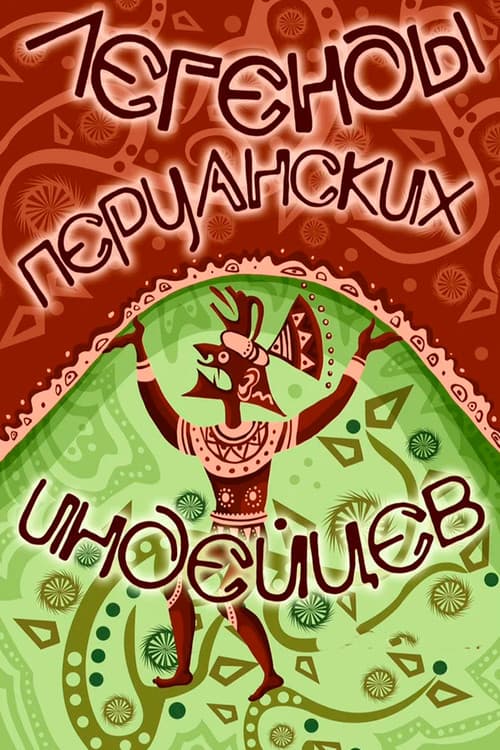
The film is based myths of the ancient Peruvians, recreated Soviet ethnographers Yuri Beryozkin on drawings Indians Mochica. The action takes place 1,500 years ago. Legend tells of two brothers, demigods, brought the sacred frog. Growing up, the brothers went to the human world, giving them a lot of happiness and a refuge from the evil monsters. But one of the monsters Rikuay survived the battle with his brothers. He deceived his younger brother, went to his centipede, which led him to ally Rica - a witch, who asked his younger brother to give people a weapon that start killing people. Only the intervention of the gods, and his older brother saved people from total destruction
Explore NowA movie follows a regular working day of a woman who works in a factory. She wakes up at 3am and goes to sleep at 10pm.
Explore NowAn exploration —manipulated and staged— of life in Las Hurdes, in the province of Cáceres, in Extremadura, Spain, as it was in 1932. Insalubrity, misery and lack of opportunities provoke the emigration of young people and the solitude of those who remain in the desolation of one of the poorest and least developed Spanish regions at that time.
Explore NowIn the vast expanse of desert East of Atlas Mountains in Morocco, seasonal rain and snow once supported livestock, but now the drought seems to never end. Hardly a blade of grass can be seen, and families travel miles on foot to get water from a muddy hole in the ground. Yet the children willingly ride donkeys and bicycles or walk for miles across rocks to a "school of hope" built of clay. Following both the students and the teachers in the Oulad Boukais Tribe's community school for over three years, SCHOOL OF HOPE shows students Mohamed, Miloud, Fatima, and their classmates, responding with childish glee to the school's altruistic young teacher, Mohamed. Each child faces individual obstacles - supporting their aging parents; avoiding restrictions from relatives based on traditional gender roles - while their young teacher makes do in a house with no electricity or water.
Explore NowA 10-minute portrait of modernist poet and de Andrade’s godfather, Manuel Bandeira, is clear in its affection for it subject, though like many New-Waveish films of the time, depicts the modern urban landscape as an ominous and alienating force.
Explore NowElem Klimov's tribute to his late wife, director Larisa Shepitko, killed in a car accident a year earlier. Features excerpts from all of her films, and archival audio of her discussing life and art.
Explore NowIn 1967, de Andrade was invited by the Italian company Olivetti to produce a documentary on the new Brazilian capital city of Brasília. Constructed during the latter half of the 1950s and founded in 1960, the city was part of an effort to populate Brazil’s vast interior region and was to be the embodiment of democratic urban planning, free from the class divisions and inequalities that characterize so many metropolises. Unsurprisingly, Brasília, Contradições de uma Cidade Nova (Brasília, Contradictions of a New City, 1968) revealed Brasília to be utopic only for the wealthy, replicating the same social problems present in every Brazilian city. (Senses of Cinema)
Explore NowDocumentary about influential Brazilian sociologist Gilberto Freyre, made in his country house in Apipucos, Pernambuco (Northeast Brazil).
Explore NowA day and night in the life of three alcoholic derelicts: "and the meek shall inherit the earth - six feet of it".
Explore NowA behind-the-scenes look at what inspired showrunner Damon Lindelof to create the HBO series Watchmen.
Explore Now