In 1919 an art school opened in Germany that would change the world forever. It was called the Bauhaus. A century later, its radical thinking still shapes our lives today. Bauhaus 100 is the story of Walter Gropius, architect and founder of the Bauhaus, and the teachers and students he gathered to form this influential school. Traumatised by his experiences during the Great War, and determined that technology should never again be used for destruction, Gropius decided to reinvent the way art and design were taught. At the Bauhaus, all the disciplines would come together to create the buildings of the future, and define a new way of living in the modern world.
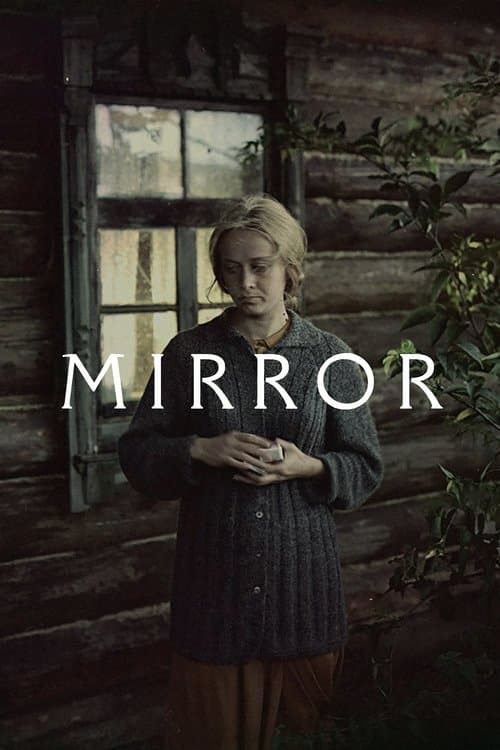
A dying man in his forties recalls his childhood, his mother, the war and personal moments that tell of and juxtapose pivotal moments in Soviet history with daily life.
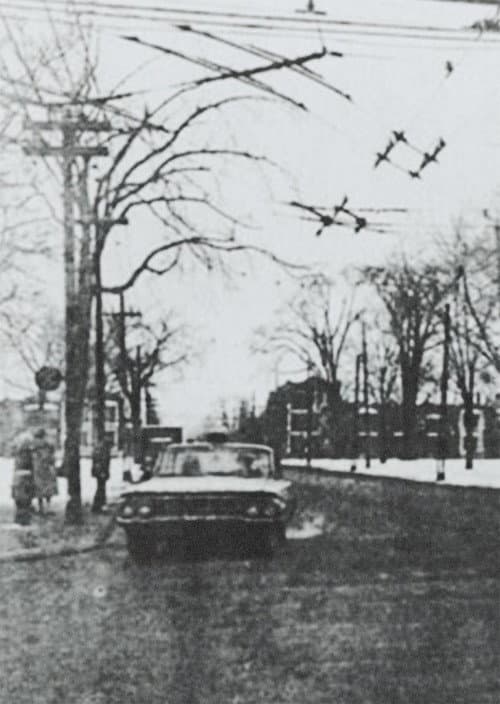
Explore NowA silent succession of black-and-white photographs of the city of Montreal.
Explore NowFrank Scheffer's (collage like) documentary on the American composer and rock guitarist Frank Zappa, as broadcast by VPRO in the Netherlands April 22,2007. Most of what’s on here is seen before, particularly in Roelof Kier’s 1971 documentary and/or Scheffer’s own documentary “A present day composer refuses to die”. But there is some new stuff too, particularly interviews with Denny Walley, Haskell Wekler, Elliot Ingber and Bruce Fowler.
Explore NowNazi Third Reich propaganda film that used architecture as a statement about "racial accomplishment," and so called "racial superiority." Hitler claimed that between 1934 and 1940, the Nazi rule of Germany had produced architectural uniqueness, and this film was produced to shown to attempt to validate that. The opening montage gives a survey of earlier Gothic and Baroque structures in the country as an example of "architectural superiority" that the German race was said to be the sole inventor of; then moves on to deride the recent construction of the Bauhaus school (with a racially motivated score of Jazz music) and an example of German "architectural decay." Then proceeds to show off buildings constructed by the Nazi and an architectural revival, to "last 1000 years," Film also spends a great of time dwelling on massive and "busy" monuments that had been erected all over the county.
Explore NowWhile Trevor and Sam are smoking pot, Trevor’s mom comes home. When she finds out, Trevor reveals his father’s adulterous ways and destroys his family.
Explore NowDuring its 85-minute running time, this jarring experimental film takes a no-holds-barred look at the way women have been treated and depicted in Western art.
Explore NowUp until the end of her life, Beatrice Wood continued to influence younger artists with her definitive, free-wheeling ways. She was central to the American Dada movement and was the last surviving member of this group. In this program she recalls her friends Man Ray, Picabia and others, and her ex-husband Marcel Duchamp. She died in 1999 at 105 years of age.
Explore NowHow can structures, which take up defined, rigid portions of space, make us feel transcendence? How can chapels turn into places of introspection? How can walls grant boundless freedom? Driven by intense childhood impressions, director Christoph Schaub visits extraordinary churches, both ancient and futuristic, and discovers works of art that take him up to the skies and all the way down to the bottom of the ocean. With the help of architects Peter Zumthor, Peter Märkli, and Álvaro Siza Vieira, artists James Turrell and Cristina Iglesias, and drummer Sergé “Jojo” Mayer, he tries to make sense of the world and decipher our spiritual experiences using the seemingly abstract concepts of light, time, rhythm, sound, and shape. The superb cinematography turns this contemplative search into a multi-sensory experience.
Explore NowAn exploration of Cologne Cathedral, an emblematic monument and world heritage site. The towering place of worship took over 600 years to complete. Once the tallest building in the world, its ornate facade remains a masterpiece of Gothic architecture - and a reflection of the evolution of Franco-German relations.
Explore NowFrom 1957 —the year in which the Soviets put the Sputnik 1 satellite into orbit— to 1969 —when American astronaut Neil Armstrong walked on the surface of the moon—, the beginnings of the space conquest were depicted in popular culture: cinema, television, comics and literature of the time contain numerous references to an imagined future.
Explore NowCrownsville Hospital: From Lunacy to Legacy is a feature-length documentary film highlighting the history of the Crownsville State Mental Hospital in Crownsville, MD.
Explore Now