The attractive Oberleutnant Paul Wendlandt is stationed in North Africa as a fighter pilot. While in Berlin to deliver a report he is given a day's leave, and on the stage of the cabaret theatre "Skala" sees the popular Danish singer Hanna Holberg. For Paul it is love at first sight. When Hanna visits friends after the end of the performance, he follows her, and speaks to her in the U-Bahn. After the party in her friends' flat, he accompanies her home and chance throws them further together when an air raid warning forces them to take cover in the air raid shelter. Hanna reciprocates Paul's feelings, but after a night spent together Paul has to return immediately to the front. There now follows a whole series of misunderstandings, and one missed opportunity after another. While Hanna waits in vain for some sign of life from Paul, he is flying on missions in North Africa. When he tries to visit her in her Berlin flat, she is giving a Christmas concert in Paris.
Explore NowBudapest in the 1930s. Restaurant owner Laszlo hires pianist András to play in his restaurant. Both men fall in love with the beautiful waitress Ilona who inspires András to his only composition. His song of Gloomy Sunday is, at first, loved and then feared, for its melancholic melody sets off a chain of suicides. The fragile balance of the erotic ménage à trois is sent off kilter when the German Hans falls in love with Ilona as well.
Explore NowIn April of 1945, Germany stands at the brink of defeat with the Russian Army closing in from the east and the Allied Expeditionary Force attacking from the west. In Berlin, capital of the Third Reich, Adolf Hitler proclaims that Germany will still achieve victory and orders his generals and advisers to fight to the last man. When the end finally does come, and Hitler lies dead by his own hand, what is left of his military must find a way to end the killing that is the Battle of Berlin, and lay down their arms in surrender.
Explore NowA touching story of an Italian book seller of Jewish ancestry who lives in his own little fairy tale. His creative and happy life would come to an abrupt halt when his entire family is deported to a concentration camp during World War II. While locked up he tries to convince his son that the whole thing is just a game.
Explore NowA young teacher inspires her class of at-risk students to learn tolerance, apply themselves, and pursue education beyond high school.
Explore NowWhat would your family reminiscences about dad sound like if he had been an early supporter of Hitler’s, a leader of the notorious SA and the Third Reich’s minister in charge of Slovakia, including its Final Solution? Executed as a war criminal in 1947, Hanns Ludin left behind a grieving widow and six young children, the youngest of whom became a filmmaker. It's a fascinating, maddening, sometimes even humorous look at what the director calls "a typical German story." (Film Forum)
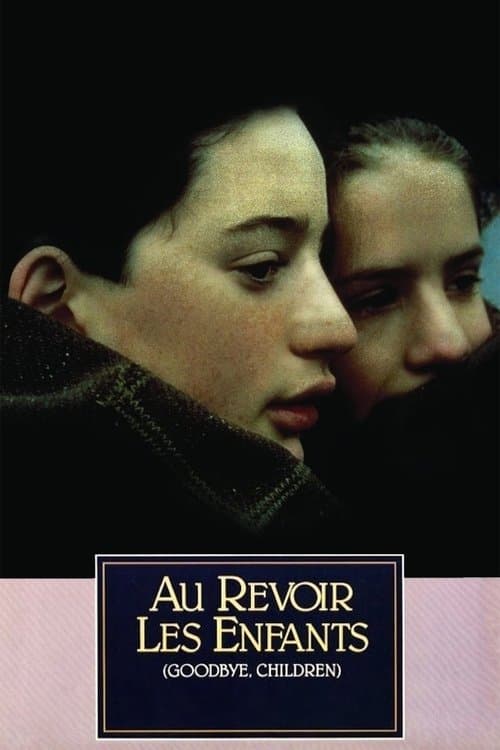
Explore NowAu revoir les enfants tells a heartbreaking story of friendship and devastating loss concerning two boys living in Nazi-occupied France. At a provincial Catholic boarding school, the precocious youths enjoy true camaraderie—until a secret is revealed. Based on events from writer-director Malle’s own childhood, the film is a subtle, precisely observed tale of courage, cowardice, and tragic awakening.
Explore NowThe Roth family leads a quiet life in a small village in the German Alps during the early 1930s. After the Nazis come to power, the family is divided and Martin Breitner, a family friend, is caught up in the turmoil.
Explore NowA Jewish woman named Jettel Redlich flees Nazi Germany with her daughter Regina, to join her husband, Walter, on a farm in Kenya. At first, Jettel refuses to adjust to her new circumstances, bringing with her a set of china dishes and an evening gown. While Regina adapts readily to this new world, forming a strong bond with her father's cook, an African named Owuor.
Explore NowHe is considered to be one of the greatest German film stars, Hans Albers, known as "Der blonde Hans", a man made for the cinema. He was an actor, singer, idol of the Germans - and darling of the Nazis. Nevertheless, he could not protect his great love, the Jewess Hansi Burg. In 1938 she had to flee to London from anti-Semitism in Germany. But Albers himself stayed in Germany and continued to film, driven by a desire for a career and the call of money. In 1946, one year after the end of the Second World War, they meet again: Hansi Burg returns to the land of the murderers of her parents in the uniform of the British Army and visits Hans Albers in his villa on Lake Starnberg. He lives there with another woman. The rival has to go, then there is a tense debate. For a day and a night, the blonde Hans has to face uncomfortable questions and even more uncomfortable truths.
Explore NowA school teacher discusses types of government with his class. His students find it too boring to repeatedly go over national socialism and believe that dictatorship cannot be established in modern Germany. He starts an experiment to show how easily the masses can become manipulated.
Explore Now