Tour the World's Hottest Spots with the Sex Goddess Herself!!
Jayne takes us on a review of her last world tour. She takes us through Rome, shares a fantasy about Roman athletes, and then is off to Cannes. She takes a trip to the nudist colony on the Isle of Levant, where she almost kind of joins in. Then it's off to Paris, where she gets a beauty treatment from Fernand Aubrey, and attends some racy dance revues. In New York and Los Angeles, she visits some topless clubs and listens to a topless all-girl pop band. The film wraps up with some posthumous footage of her family in mourning.
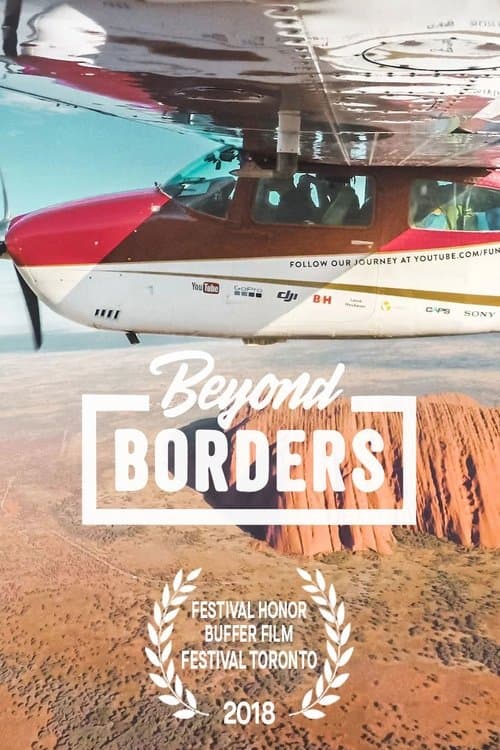
Pilot JP Schulze and filmmaker Louis Cole set off to circumnavigate the world in a single-engine, 1974 Cessna T210L airplane named Balloo. They had 90 days to complete the journey, and as they traveled they met people from many different cultures and asked them - is what divides us greater than what brings us together?
Explore NowDirected by Patrick Gramm, 'The Pigeon People' (2023) takes you deep into Arizona's underground pigeon racing scene as racing rivals prepare for and compete in the Grand Canyon Classic - a 350-mile pigeon race from Utah to Arizona that crosses over the Grand Canyon.
Explore NowLuzía visits the eight stages of the 'pilgrimage' that the intellectuals Otero Pedrayo, Vicente Risco and Ben-Cho-Shey hiked from Ourense to San Andrés de Teixido in 1927; the story of the journey was published in the book ‘Pelerinaxes I’ (Pilgrimages I). She carries out this journey in order to finish up an audiovisual project about Otero Pedrayo’s book started at the University, together with a colleague who passed away in an accident.
Explore NowWorking men and women leave through the main gate of the Lumière factory in Lyon, France. Filmed on 22 March 1895, it is often referred to as the first real motion picture ever made, although Louis Le Prince's 1888 Roundhay Garden Scene pre-dated it by seven years. Three separate versions of this film exist, which differ from one another in numerous ways. The first version features a carriage drawn by one horse, while in the second version the carriage is drawn by two horses, and there is no carriage at all in the third version. The clothing style is also different between the three versions, demonstrating the different seasons in which each was filmed. This film was made in the 35 mm format with an aspect ratio of 1.33:1, and at a speed of 16 frames per second. At that rate, the 17 meters of film length provided a duration of 46 seconds, holding a total of 800 frames.
Explore NowA documentary film following Isao Takahata to Canada to meet Frédéric Back.
Explore NowA documentary on the revolutionary life and career of director Juan Antonio Bardem, including interviews with many of his colleagues, including Luis Garcia Berlanga.
Explore NowSophia Loren, who was born in Rome and lived there as a child, returns to the city that will forever be in her blood and gives her impressions of and reactions to the mosaic of Rome and the people she encounters there during her visit. She meets Marcello Mastroianni and Vittorio de Sica as she visits the sights, affectionately commenting on the grandeur of the Eternal City and the irrepressible nature of its people.
Explore NowWhen Francois Truffaut approached Alfred Hitchcock in 1962 with the idea of having a long conversation with him about his work and publishing this in book form, he didn't imagine that more than four years would pass before Le Cinéma selon Hitchcock finally appeared in 1966. Not only in France but all over the world, Truffaut's Hitchcock interview developed over the years into a standard bible of film literature. In 1983, three years after Hitchcock's death, Truffaut decided to expand his by now legendary book to include a concluding chapter and have it published as the "Edition définitive". This film describes the genesis of the "Hitchbook" and throws light on the strange friendship between two completely different men. The centrepieces are the extracts from the original sound recordings of the interview with the voices of Alfred Hitchcock, Francois Truffaut, and Helen Scott – recordings which have never been heard in public before.
Explore NowIn 1993 a trio of Bradford taxi drivers, Fazal, Patrick, and Azad, decide to buy three used Transit vans in Britain and drive them overland all the way to northern Pakistan. Their plan is to sell the vehicles on arrival at a nice profit, and then to celebrate the Eid Muslim festival with their extended families. A quirky and often comical film, the “Punjab Road Runners”, charts their stumbling passage through Western Europe, Eastern Europe, and Asia
Explore Now