The autobiographical account of the tormented life of a witness of the century: Louisa Ighilahriz, activist and leading figure in Algerian independence. A student, she joined the independence struggle at the age of 20, joining the ranks of the FLN on the eve of the Battle of Algiers in late 1956 under the name Lila. She took part in the high school students' strike, then fled into the maquis when she was actively sought after. She was part of the French FLN support network of "suitcase carriers" during the Battle of Algiers. Seriously wounded alongside her network leader, Saïd Bakel, during an ambush in 1957, hospitalized and then imprisoned, she suffered numerous tortures in French prisons. She will be saved from certain death by an anonymous person, she will seek, for forty years, to find him just to show him her gratitude... Emblematic of the painful Franco-Algerian history, Louisa's story is poignant and imbued with humanism.
Brazil is one of the most dangerous countries for environmentalists. The rural community of Belisário holds the country's second largest bauxite reserve, right below one of the most bio-diverse areas in the world: the Atlantic Forest. The small community was shaken when the beloved Gilberto, a Franciscan Friar, received a death threat followed by the lines: "you've been talking against mining way too much". PT: O Brasil é um dos países mais perigosos do mundo para defensores do meio ambiente. Em Minas Gerais, a comunidade rural de Belisário abriga a segunda maior reserva de bauxita do país, em uma das áreas de maior biodiversidade do mundo: a Mata Atlântica. A tranquilidade do pequeno vilarejo foi abalada quando Frei Gilberto, um franciscano que dedica sua vida à preservação da natureza, recebeu uma ameaça de morte com o seguinte aviso: "você tem falado demais contra a mineração".
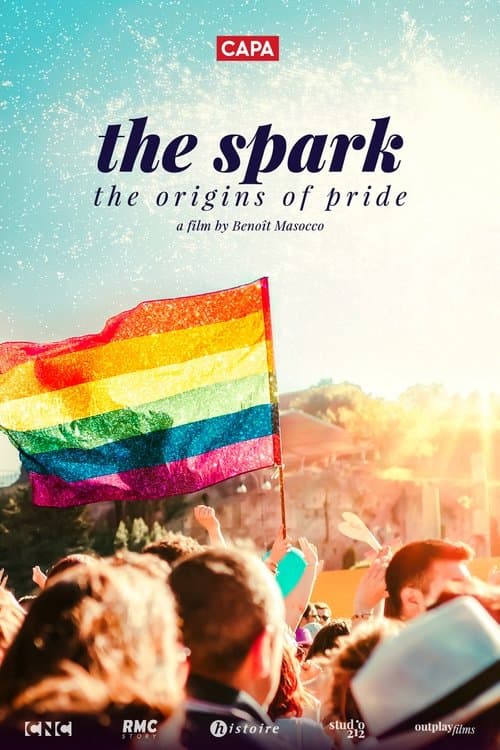
Explore NowA story of the LGBT struggle from the 1960s to the present, after the Stonewall riot sparked the militant action in New York that was to spread around the world. From San Francisco to Paris via Amsterdam, between the first Gay Pride, the election of Harvey Milk, the French "decriminalization", the AIDS epidemic and the first homosexual marriages, these few decades of struggle are embodied through numerous testimonies of actors and actresses of this revolution rainbow.
Explore NowIt’s the last dictatorship of Europe, caught in a Soviet time-warp, where the secret police is still called the KGB and the president rules by fear. Disappearances, political assassinations, waves of repression and mass arrests are all regular occurances. But while half of Belarus moves closer to Russia, the other half is trying to resist…
Explore NowA documentary about the atrocities committed against the Hmong people by the Laos government. Shot by Hmong people with cameras provided to them in 2006, this film provides a unique look into one of the worst, and silent, human rights tragedies of the 21st century.
Explore NowThe exceptional portrait of a pacifist general, the only senior officer to have spoken out against torture. This precious testimony still remains censored in France, since no national channel has to date decided to program this documentary. Son and brother of a soldier, General Pâris de Bollardière was destined for a career in arms. He was, for many years, one of the most brilliant representatives of this adventurer career in France, from Narvik to the Algerian War. After fighting in the French maquis, he reached Indochina, where he suddenly found himself in the aggressor's camps. His beliefs are strongly shaken. But it is in Algeria, where the French army practices torture and summary executions, that he takes the big turn. He expresses his contempt to Massu, and is relieved of his command. Until his death in 1986, Jacques de Bollardière fought for world peace, from the Larzac plateaus to the Mururoa atolls.
Explore NowStructured as a labyrinth-like game and inspired by Jorge Luis Borges, Aleph is a travelogue of experience, a dreamer's journey through the lives, experiences, stories and musings of protagonists spanning ten countries and five continents.
Explore NowA short documentary about the October 14 1979 March For Lesbian And Gay Rights in Washington D.C.
Explore NowA warm, attentive chronicle of everyday life in a small Algerian town, with the backdrop of the inhabitants' development and beautification of one of the neighborhoods. We meet an amateur mechanic, a retired man from France, a doctor, old women and young men. Everyone plays... in front of the camera of one of the youngsters. Even when the riots in Kabylia disrupt the course of daily life in the Cité des Martyrs.
Explore NowIn a candid and unflinching portrait of Palestinian prisoners, Shimon Dotan takes viewers inside the highest security prisons in Israel where thousands of Palestinians fill these detention facilities.
Explore Now“La Zerda and the songs of oblivion” (1982) is one of only two films made by the Algerian novelist Assia Djebar, with “La Nouba des femmes du mont Chenoua” (1977). Powerful poetic essay based on archives, in which Assia Djebar – in collaboration with the poet Malek Alloula and the composer Ahmed Essyad – deconstructs the French colonial propaganda of the Pathé-Gaumont newsreels from 1912 to 1942, to reveal the signs of revolt among the subjugated North African population. Through the reassembly of these propaganda images, Djebar recovers the history of the Zerda ceremonies, suggesting that the power and mysticism of this tradition were obliterated and erased by the predatory voyeurism of the colonial gaze. This very gaze is thus subverted and a hidden tradition of resistance and struggle is revealed, against any exoticizing and orientalist temptation.
Explore NowDeep beneath the surface in the Syrian province of Ghouta, a group of female doctors have established an underground field hospital. Under the supervision of paediatrician Dr. Amani and her staff of doctors and nurses, hope is restored for some of the thousands of children and civilian victims of the ruthless Syrian civil war.
Explore Now