How to build a house during the end of the world.
A group of young architects, confined to a forest in Barcelona during the COVID crisis, explore the problems generated by the ambition of wanting to be completely self-sufficient.
The actress Lola Dewaere recounts the film career and traumatic life of celebrated actor Patrick Dewaere, the father she never knew, under the watchful eye of director Alexandre Moix.
Explore NowIn 2001, Jimmy Wales published the first article on Wikipedia, a collaborative effort that began with a promise: to democratize the spreading of knowledge, monopolized by the elites for centuries. But is Wikipedia really a utopia come true?
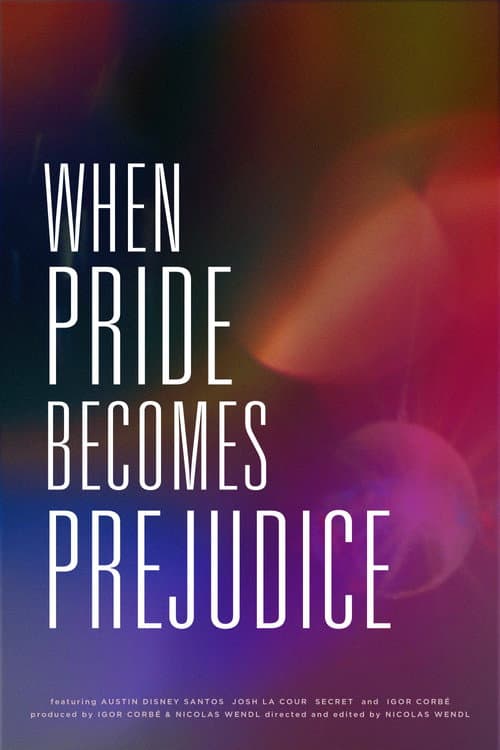
Explore NowA short documentary immersing you in the intimacy and harsh reality of young LGBTQ+ artists, working in Los Angeles in the midst of the glamorous neighborhood of West Hollywood.
Explore NowOn the Puerto Rican diaspora, which includes renowned artists who have converted New York, Florida, Chicago, Hawaii, Santa Cruz and Dominican Republic into their second home, but with Puerto Rico in their hearts.
Explore NowBill Moyers tells the story of several hardworking Milwaukee families struggling with low-paying jobs after previous employers downsized their operations. Filmed over a period of five years, these families were first featured in Moyers’s 1992 documentary ‘Minimum Wages: The New Economy.’ FRONTLINE chronicles the families’ emotional and financial strains, their search for better jobs and job retraining, and looks at Milwaukee’s efforts to adapt to an ever-shrinking industrial sector.
Explore NowDirected by Patrick Gramm, 'The Pigeon People' (2023) takes you deep into Arizona's underground pigeon racing scene as racing rivals prepare for and compete in the Grand Canyon Classic - a 350-mile pigeon race from Utah to Arizona that crosses over the Grand Canyon.
Explore NowA documentary that details the process of restoring 270 of the 520 lost films of pioneering director Georges Méliès, all orchestrated by a Franco-American collaboration between Lobster Films, the National Film Center, and the Library of Congress.
Explore NowNazi Third Reich propaganda film that used architecture as a statement about "racial accomplishment," and so called "racial superiority." Hitler claimed that between 1934 and 1940, the Nazi rule of Germany had produced architectural uniqueness, and this film was produced to shown to attempt to validate that. The opening montage gives a survey of earlier Gothic and Baroque structures in the country as an example of "architectural superiority" that the German race was said to be the sole inventor of; then moves on to deride the recent construction of the Bauhaus school (with a racially motivated score of Jazz music) and an example of German "architectural decay." Then proceeds to show off buildings constructed by the Nazi and an architectural revival, to "last 1000 years," Film also spends a great of time dwelling on massive and "busy" monuments that had been erected all over the county.
Explore NowExploration of prejudice and culture clash that a group of Laotian Buddhist refugees must endure in Rockford, Illinois.
Explore Now