Satyajit Ray's poetic documentary was commissioned by the Chogyal (King) of Sikkim at a time when he felt the sovereignty of Sikkim was under threat from both China and India. Ray's documentary is about the sovereignty of Sikkim. The film was banned by the government of India when Sikkim merged with India in 1975. The ban was finally lifted by the Ministry of External Affairs in September 2010. Preserved by the Academy Film Archive in 2007.
Transcending cultural barriers and consistently going against the grain, female Nepali climber Pasang Lhamu Sherpa attempted to summit Everest four times in the early nineties. Although she was not allowed to attend school as a child, Pasang did not let that stop her from pursuing her dreams. After founding her own trekking company in Kathmandu, she blazed a trail for Nepali women via her efforts to summit Everest. Proving how big you can dream and how far you can go to achieve those dreams, she left a legacy not only for the family she has left behind, but for the myriad women following in her footsteps.
Explore NowShort documentary extolling the virtues and necessity for women to participate in America's preparation for war, showing women working in scientific, industrial, and voluntary-services activities. Preserved by the Academy Film Archive in 2008.
Explore NowDocumentary short explaining proper techniques for handling and disposal of incendiary bombs. Preserved by the Academy Film Archive, from the Academy War Film Collection, in 2009.
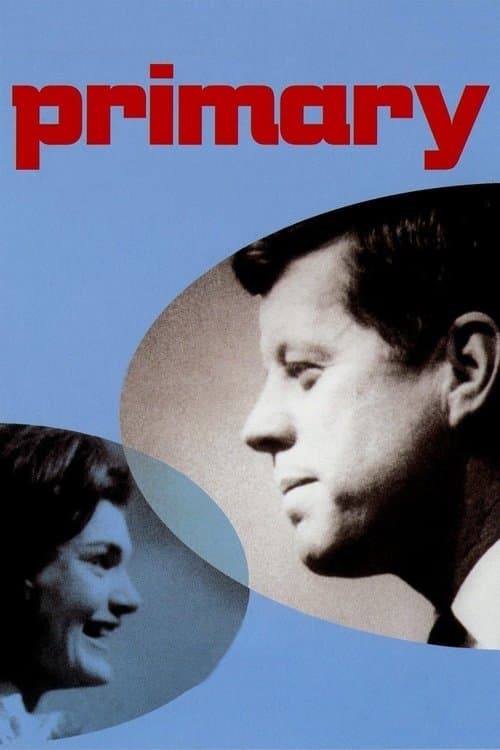
Explore NowAlbert and David Maysles (Gimme Shelter) directed this 53-minute documentary about movie tycoon Joseph E. Levine (1963). Preserved by the Academy Film Archive in 2012.
Explore NowThe Film follows Indian biologist Dr. Sunita Pradhan who at that time had been studying red pandas for over 10 years.
Explore NowIn 1953, Sir Edmund Hillary & Tenzing Norgay made history as the first people to reach the top of Everest. Now, 50 years later, three sons of Everest's most celebrated climbers return to the mountain to challenge it again. Join their journey as they brave the elements and face death to climb 29,000 feet of wind-blasted rock and ice. And, relive the dramatic history of Everest from great triumphs to deadly tragedies, enduring rivalries and the unsung role of the Sherpa people—as National Geographic exposes the untold stories that lurk in the mountain's epic shadow and takes you on the ultimate Everest experience.
Explore NowThe highest mountain range in the world, the Himalayan range is far reaching, spanning thousands of miles, and holds within it an exceptionally diverse ecology. Coniferous and subtropical forests, wetlands, and montane grasslands are as much a part of this world as the inhospitable, frozen mountaintops that tower above. The word Himalaya is Sanskrit for abode of snow, fitting for a stretch of land that houses the world’s largest non polar ice masses. Extensive glacial networks feed Asia's major rivers including the Ganges, Indus, and Brahmaputra. More than a billion people rely on these glacier-fed water sources for drinking water and agriculture. The Himalayas are not only a remarkable expanse of natural beauty. They're also crucial for our survival.
Explore NowA lyrical recreation of Lightnin’ Hopkins’ decision at age eight to stop chopping cotton and start singing for a living. Preserved by the Academy Film Archive in 2013.
Explore NowThe film reflects Dewdney's conviction that the projector, not the camera, is the filmmaker's true medium. The form and content of the film are shown to derive directly from the mechanical operation of the projector - specifically the maltese cross movement's animation of the disk and the cross illustrates graphically (pun intended) the projector's essential parts and movements. It also alludes to a dialectic of continuous-discontinuous movements that pervades the apparatus, from its central mechanical operation to the spectator's perception of the film's images... (His) soundtrack demonstrates that what we hear is also built out of continuous-discontinuous 'sub-sets.' Preserved by the Academy Film Archive in 2009.
Explore NowMixing narrative and documentary, the film retells a 16 year old girl's experience of a date rape.
Explore NowDocumentary that captures Tom Petty and the band in 1982-1983 as they finish, promote, and tour around the “Long After Dark” album (their final with legendary producer Jimmy Iovine). It aired only once on MTV in 1983. After the long lost 16mm reels were finally found, a restored version with 19 minutes of extra footage was released in 2024.
Explore Now